
Powering Tomorrow’s Infrastructure: How PowerSync Helps Data Centres Monetise Energy Flexibility

Blog
>
Energy
As the digital economy expands, data centres are becoming essential infrastructure, powering everything from AI models and cloud platforms to financial systems, streaming services and critical business operations.
That growth is driving a major increase in electricity demand. McKinsey has estimated that global demand for data centre capacity could almost triple by 2030, with around 70% of that growth linked to AI workloads. In the UK, the issue is particularly visible: government and parliamentary analysis suggests UK data centre capacity could rise to between 3.3 GW and 6.3 GW by 2030, depending on policy settings.
That creates pressure on electricity networks, connection queues and local infrastructure. But it also creates an opportunity. Data centres are not just large energy users. With the right orchestration, they can become flexible, resilient energy assets that support the grid while creating new revenue streams.
PowerSync Technologies helps data centres transform existing energy infrastructure into market-ready flexibility, enabling participation in energy, balancing, capacity and local flexibility markets while maintaining uptime, resilience and ESG performance.
The energy demand surge — and the opportunity it creates
AI, cloud computing and digital services are increasing the power intensity of data centre operations. In the UK, this is happening at the same time as the electricity system is trying to decarbonise, connect more renewables and manage increasing network constraints.
This means data centre growth cannot be viewed only as a load challenge. It must also be treated as a flexibility opportunity.
Data centres already have high-quality energy infrastructure, sophisticated monitoring, backup systems, UPS assets, cooling systems, batteries, generators and operational controls. These systems are designed for reliability. With careful orchestration, some of that capability can also support the energy system without compromising critical IT loads.
Energy UK has made this point directly, noting that data centres can act as flexible assets through demand-side response and storage co-location, while also supporting wider energy system decarbonisation.
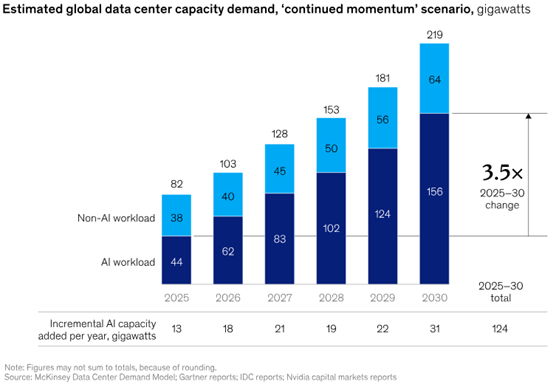
This surge places increasing strain on electricity networks, but it also creates a significant opportunity: data centres can monetise their batteries, UPS systems, and load flexibility to help stabilise the grid and get paid for it.
How data centres can participate
1. UPS and battery-based frequency response
Large UPS and battery systems can provide very fast response where technically suitable and operationally permitted. In Great Britain, this may include participation in frequency response services such as Dynamic Containment, Dynamic Moderation or Dynamic Regulation, depending on asset capability, metering, controls and market access.
The key is to reserve only an agreed portion of capacity for market participation, ensuring sufficient backup remains available for its primary purpose: protecting critical IT loads.
2. Backup generation and capacity mechanisms
Data centres often operate diesel or gas backup generation for resilience. Where compliant and commercially appropriate, these assets may be able to participate in capacity or reserve-style arrangements, earning availability or activation revenue while remaining aligned with site resilience requirements.
This must be managed carefully. Backup generation should never compromise business continuity, environmental obligations, planning conditions or operational standards. But where capacity is available, it can create additional value from assets that otherwise sit idle for most of the year.
3. Cooling and HVAC flexibility
Cooling is one of the most important flexibility opportunities for data centres. In many cases, cooling demand can be briefly shifted, pre-cooled or adjusted within strict thermal limits.
This can allow a site to reduce demand during system stress, shift consumption away from expensive periods, or participate in demand flexibility services without affecting server hall conditions or service levels.
4. Battery storage and energy optimisation
Where data centres have dedicated battery storage, it can be used for more than backup. Batteries can charge during low-price or high-renewable periods and discharge during higher-value periods, while also supporting balancing services, local flexibility requirements or capacity products.
The value comes from co-optimisation. A battery should not be committed to one use case if another market or site requirement is more valuable at that moment.
5. Onsite renewables and flexible demand
Where data centres have onsite solar, storage, EV charging or other flexible demand, PowerSync can coordinate these assets to maximise value across site savings and market participation.
This includes reducing import costs, managing peaks, responding to market signals and supporting grid stability through controlled, auditable operation.
How PowerSync helps data centres monetise flexibility
Intelligent asset orchestration
PowerSync’s platform spans Edge, Cloud and Market layers. It connects to existing site systems, including batteries, UPS assets, backup generators, flexible loads, meters, EMS, BMS and SCADA systems.
The platform uses real-time data, forecasting and optimisation to coordinate assets safely within agreed operational limits.
Market access with compliance built in
PowerSync supports participation across relevant energy and flexibility pathways, including balancing services, demand flexibility, capacity mechanisms and local network flexibility markets.
NESO’s balancing services already include frequency response and the Demand Flexibility Service, which rewards consumers and businesses for flexing when they use electricity. NESO has also confirmed an evolved Demand Flexibility Service design intended to support year-round use and unlock new opportunities for businesses and consumers through suppliers or third-party aggregators.
Revenue optimisation without compromising resilience
Data centres cannot take operational risks. PowerSync’s approach is therefore resilience-first.
Participation is configured around safe limits, site availability, reserve requirements, thermal thresholds, backup obligations and customer override rights. The objective is to monetise flexibility only where it is compatible with uptime, service quality and operational control.
Turning energy assets into strategic infrastructure
For many data centres, energy infrastructure is treated as a cost of doing business. PowerSync helps turn that infrastructure into a strategic asset.
UPS systems, batteries, generators and flexible cooling can all contribute to energy market value when orchestrated correctly. This can support revenue generation, reduce energy costs, improve asset utilisation and strengthen ESG outcomes.
Why acting early matters
The UK is moving quickly toward a more flexible electricity system. Grid connection reform, growing AI electricity demand, local flexibility markets and NESO’s evolving balancing services all point in the same direction: large flexible energy users will become increasingly important.
At the same time, grid access is becoming a strategic issue for data centre developers and operators. UK government consultation on strategic demand has specifically identified data centres as part of the challenge in accelerating and prioritising electricity network connections.
This means data centres that can demonstrate flexibility, controllability and grid-support capability may be better placed commercially and strategically than those that are simply large passive loads.
The bottom line
Data centres are critical to the UK’s digital future, but they will also place increasing pressure on the electricity system. The opportunity is to make them part of the solution.
With the right orchestration, data centres can maintain resilience, protect uptime and unlock new value from existing energy assets while supporting a cleaner, more flexible grid.
Contact PowerSync Technologies today to explore how your UPS systems, batteries, backup generation and flexible cooling loads can be safely orchestrated to unlock energy market value without compromising operational resilience.
- What is a data center? McKinsey & Company. Available at: https://www.mckinsey.com/featured-insights/mckinsey-explainers/what-is-a-data-center
Share this post
- Blog
Latest Insights and Trends
Explore the latest trends in energy technology and solutions.


- 2-4 Noel Street, London W1F 8GB
- 0808 101 4290
- info@powersync.co.uk